This project involves a multinational collaboration among academic institutions, research Centre and industrial operators form various European Member States.
The partners of this project are the following
- RINA Consulting - Centro Sviluppo Materiali S.p.A (CSM) (Italy)
- Voestalpine Stahl GmbH (VAS) (Austria)
- Gent University of Technology (UGent) (Belgium)
- OCAS (OCAS) (Belgium)
- Institute of Electrical Machines, RWTH Aachen University (RWTH Aachen) (Germany)
The partnership is a well-balanced team of producers of Electrical Steel sheets, plant designer and Research Centers/University, all of them having already performed many European multi-partner's projects, guarantees the necessary competences, skills, facilities, and knowledge of the market, required to fulfil the targets of the project.
Following a description of each Company/institute is reported.

RINA Consulting - Centro Sviluppo Materiali S.p.A (CSM): CSM is a leading Centre for applied research with extensive experiences on metallurgical design of steels and other materials. Founded in 1963 in reply to the Italian Steel Making and Steel Using Industries' request, during the years it evolved into a more extended complex of laboratories and responded to the ever increasing importance of new materials beside steel.
Nowadays with a staff of about 250 people and equipped laboratories (FEG-TEM, SEM-OIM, XRD, advanced mechanical testing, full scale testing facilities, analytical chemistry, electrochemistry and corrosion, welding and joining and NDT, coatings and tribology, melting technology and prototyping, simulation of processes of ironmaking and steelmaking industries), the purpose of this Centre is to carry out research on science and technology, in the field of material innovation and know-how development.
In the field of Silicon Iron has more than 40 years' experience working as "research partners" for leading industries in the field both in Italy and abroad.
CSM carries out research and development in close collaboration with national and international universities, the Italian Government, European and International agencies, industries and other supporting institutions and it is active in European project activities (E.C.S.C., R.F.C.S., Horizon Framework Programs, international collaborations, etc.).
MELTING PLANT USED IN THE PROJECT
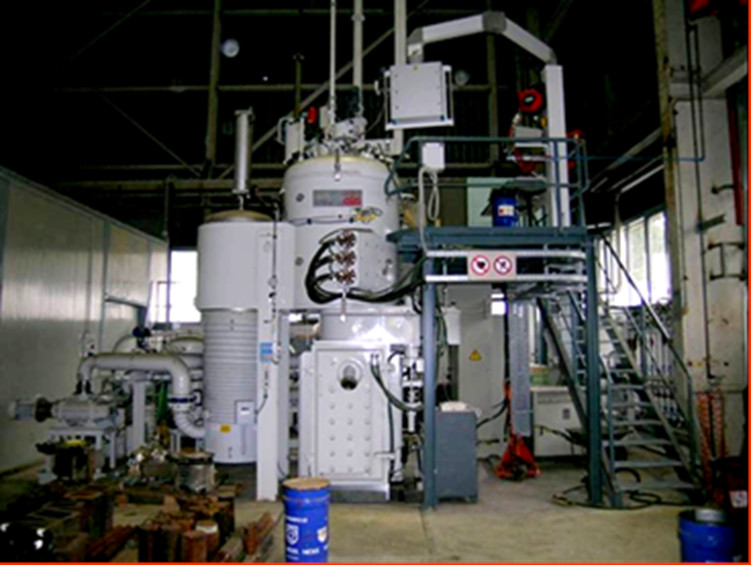
- Charging materials: Raw materials; dry and grease or oil free
- Final product: Ingots, bars, complex shape components
- Melting Temp: 1300 — 1600 °C (depending on alloy grade)
- Atmosphere: Vacuum, Inert gas
- Process pressure 5 x 10⁻⁵ — 300 mbar
- Overheating temperature: 1750 °C
- Temperature measurement: 750-1800°C (thermocouple, optical pyrometer)
- Sampling of liquid metals: Quartz mold
- Melting/Casting capacities: Casting mode:
- Top pouring into Molds. or Ceramic shells (investment casting)
TEM / STEM INSTRUMENT USED IN THE PROJECT
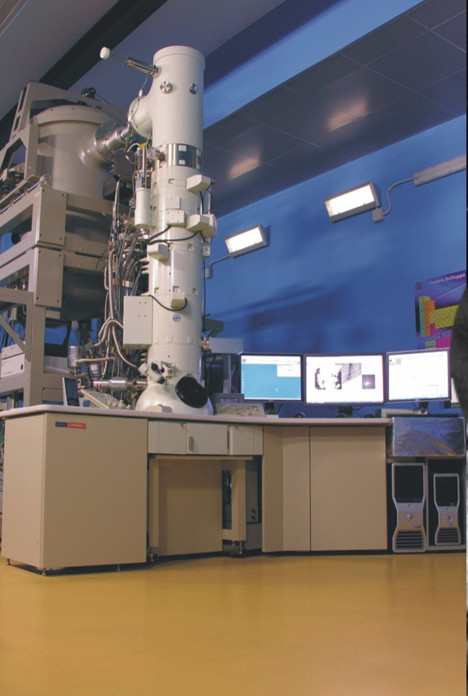
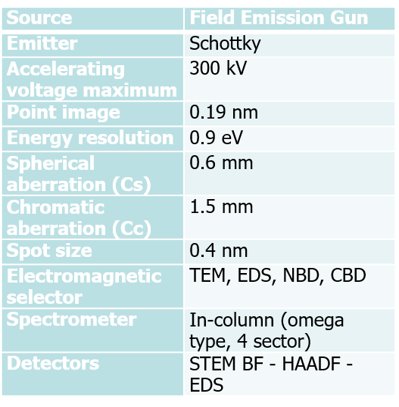
TEM INSTRUMENT CHARACTERISTICS
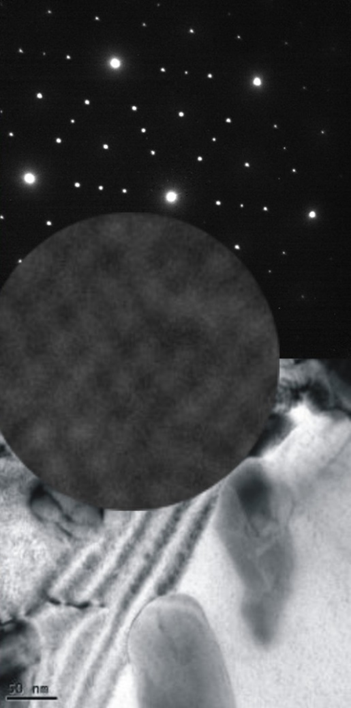
HIGH RESOLUTION IMAGE, AND HIGH RESOLUTIONDIFFRACTION ACQUIRED WITH TEM INSTRUMENT USED IN THE PROJECT

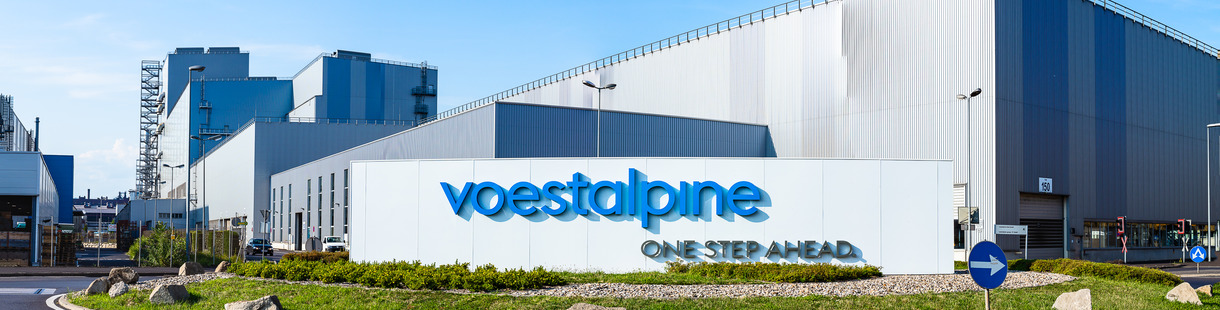
Voestalpine Stahl (VAS): Voestalpine Stahl GmbH is part of the Voestalpine group, a stock exchange listed company, and the group's leading company in the Steel Division. It is the steel competence centre within the Voestalpine group. At its production site in Linz, about 7.000 employees work in the manufacturing and processing of flat steel, hot rolled sheet as well as highly refined cold rolled steel sheets.
Voestalpine Stahl GmbH ranks among the leading suppliers of the European automotive, domestic appliance and construction industries, as well as steel construction and engineering businesses.
R&D is focused on the one hand on optimizing the steel production process in regard to quality, environment and energy efficiency, and on the other hand on the development of high and highest strength steels as well as on the development of new coatings.
Voestalpine Stahl GmbH is among the top suppliers of NGO (Non Grain Oriented) electrical steel strip in the EU. The isovac® grades, used for high-efficiency applications, show the innovativeness and material competence of Voestalpine. The R&D department has a research group in which activities are focused on the development of electrical steel grades as well as coatings and, in cooperation with customers, technological aspects of the material in use. Modern simulation equipment is available for hot rolling, cold rolling and annealing at laboratory scale. In a special test center the magnetic properties of the material can be measured, the analysis of mechanical properties, microstructure and texture (EBSD) can also be performed on electrical steel grades.
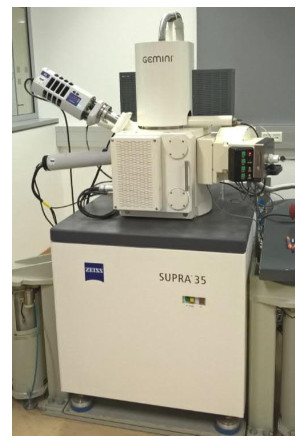
- ZEISS Ultra55 FEG-SEM
- Resolution: 1.0 nm @ 15 kV; 1.7 nm @ 1 kV; 4.0 nm @ 0.1 Kv
- Thermal Field Emission Gun (FEG), stability > 0.2 %/h
- Accelerating Voltage: 20 V - 30 kV
- High efficiency EsB detector for compositional information
- In-lens SE detector for high contrast surface imaging
- 5-Axes Motorised Eucentric Specimen Stage
- Oxford X-Max Plus Si-drift detector (50 mm²) EDS-System»Oxford Instruments AZtecFeature particle analysis software
- Classification of particles according to chemistry, shapeand size
- Detection limit: precipitation size100nm (resolution inlateral direction and depth)
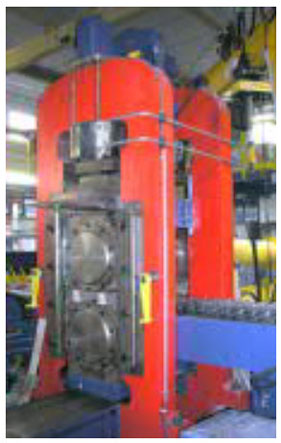
Reheating furnace and rolling mill
- Reheating furnace (up to 1250 °C)
- Roller table
- Waterjet-descaler
- Reverse rolling stand (DUO)
- Rolling speed up to 5 m/s
- Inter-pass times as low as 3 s
Cooling section
- Temperature-controlled "coil"-box
- Initial sample dimensions:
- length: 180 - 400 mm;
- width: 140 - 200 mm;
- height: max. 285 mm; weight: max. 80 kg
- Final sample dimensions:
- thickness:2.5 mm;
- length: max. 2000 m
Universiteit Gent (UGent): Universiteit Gent (UGent) has more than 40,000 students. A significant part of the expertise of the Department of Electrical Energy, Metals, Mechanical constructions & Systems (more than 200 persons) lays in the areas of Metals Science and Technology (MST). The research in the MST group aims at acquiring and developing fundamental insight in the physical and thermodynamic aspects of microstructure formation in metals. Controlling the microstructural processes is essential for controlling the properties of metal alloys and forms the basis for the development of novel materials. The research undertaken is directly related to optimization of industrial processes for metals production and the development of innovative technologies, relating to the limited availability of energy and materials resources.
The MST group has an extensive track record of microstructural research on metal alloys, primarily steel and aluminium. This research includes both extensive experimental characterisation of microstructures and microstructural modelling. The experimental characterisation is carried out primarily with optical and electron microscopy (both Scanning and Transmission Electron Microscopy). In this respect orientation contrast microscopy by Electron Backscatter Diffraction is of crucial importance because this imaging technique is ideally suited to convert the microstructurally information contained in (reconstructed) images to numerical data that can be post-processed by statistical techniques. Together with XRD, EBSD is also the tool of choice to characterise the crystallographic texture.
The MST group also has extensive experience in modelling solid-state-transformation processes in metals occurring through thermo-mechanical processing of metal sheet, including plastic deformation, recrystallization, grain growth and phase transformation. A particular track record has been accumulated in modelling of the crystallographic aspects of these processes, which have a direct consequence for texture control during metal sheet manufacturing, which is specific importance for electrical steels.
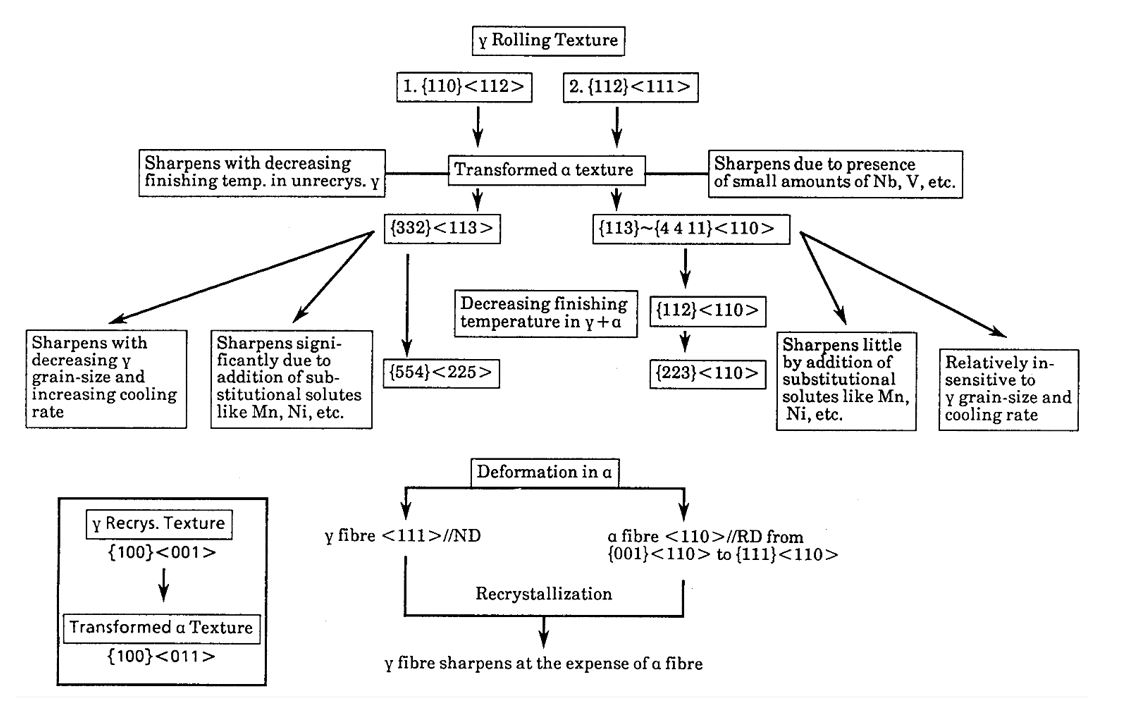
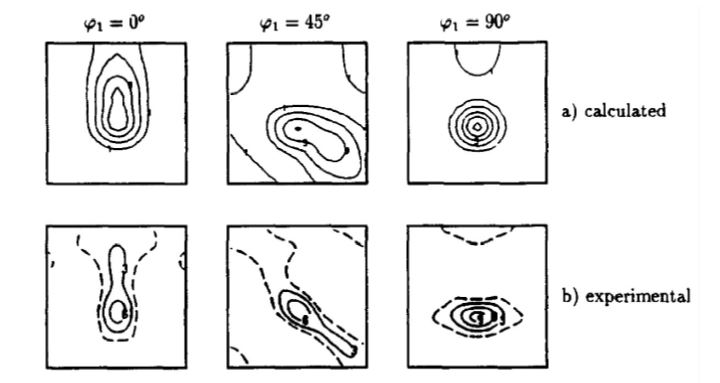
EBSD: METHOD USED TO CHARACTERIZE TEXTURE OF THE FeSi MATERIAL


OCAS: OCAS (Onderzoeks Centrum voor de Aanwending van Staal - in English: Research Centre for the Application of Steel) is an advanced, market-oriented research centre providing steel and metal-based products, services and solutions to metal processing companies worldwide. Within ArcelorMittal, OCAS is known as ArcelorMittal Global R&D Gent and is as such in charge of all ArcelorMittal R&D projects within the market of general industry for flat carbon steel. OCAS is the specialised R&D centre of the ArcelorMittal Group on the research and development of electrical steel grades. OCAS is equipped for the full metal processing and magnetic characterization of electrical steels. OCAS laboratories have a unique range of state-of-the-art analysis and simulation tools, and even a complete lab scale steel production line. All activities are supported by a state-of-the-art material characterization and testing laboratory, with unique facilities in coating, metal characterization and processing tools.
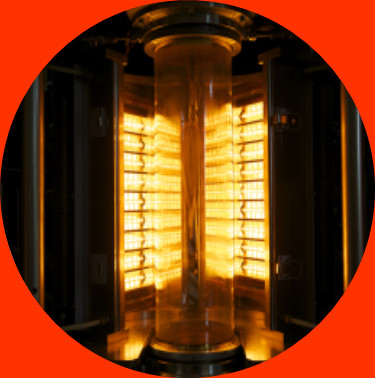
Annealing tubular furnace with controlled atmosphere
Laboratory mill for cold rolling operations
Continuous annealing simulator in controlled atmosphere

Institute of Electrical Machines, RWTH Aachen University (RWTH Aachen): The research focus of the Institute of Electrical Machines (IEM) at RWTH Aachen University is on the design, calculation, analysis, simulation and control of electrical machines. The development of methods for numerical field computations, represents a traditional focus of work, which can be used to investigate complicated electromagnetic problems that are not covered by commercial software. Work on complete system simulations of electric powertrains is also one of the core activities. In the field of design, diagnostics, simulation, control, the construction of prototypes and the operation of electromechanical energy converters, IEM has extensive experience. Prototypes are measured with modern tools for the development of drive control systems, such as rapid-control prototyping systems. The required hardware is developed and manufactured at the institute.
In recent years, the effect of materials on electrical machines has been a strong focus. The existing infrastructure at IEM enables the metrological investigation of soft magnetic materials from DC magnetizations up to magnetizing frequencies of 10 kHz. The measurement samples can also be measured under mechanical stress, different excitation forms (sinusoidal, rectangular, PWM, rotating).

WP 6: Magnetic and mechanical characterization of finished product - Experimental Single-Sheet-Tester measurements (60 mm x60 mm)
- Benchmarking (RWTH, OCAS, CSM) - Magnetic characterization of produced material (RWTH, OCAS) - Rotational-Single-Sheet-Tester measurements (60 mm x60 mm)
- With different axis ratios Bmin/Bmax0.0 (axial), 0.25 (elliptical), 0.5 (elliptical), 0.75 (elliptical) and 1.0 (rotational) - Magnetic domain characterization through neutron scattering
- On selected samples (Proposal will be written after first samples are produced and magnetically characterized) - Follow-up on effect of mechanical properties (VAS, OCAS)
- Vickers hardness tests (OCAS) and by standard tensile testing (VAS) - On selected samples